
5 Underexamined Consequences of the Declining Birth Rate

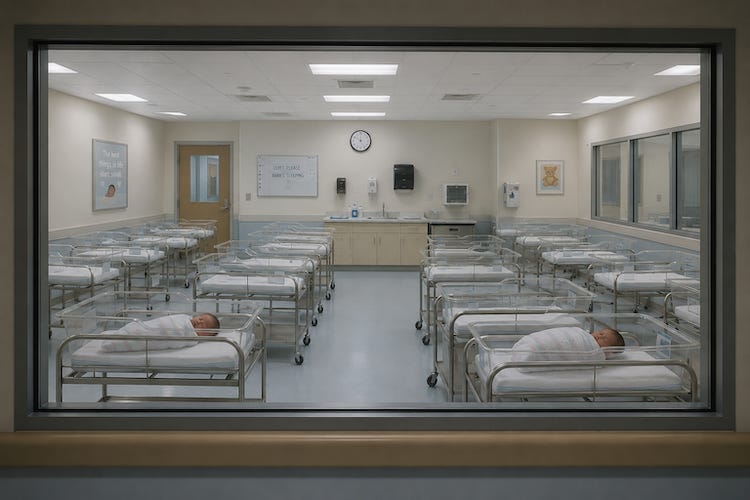
The fact that the birth rate is declining worldwide — having just hit another record low in the U.S. — has hardly wanted for attention.
You can find plenty of think pieces and podcast episodes and social media posts discussing it.
Debates around the “fertility crisis” can often get heated and shrill. The issue is frequently politicized, as different groups interpret its origins and solutions through entirely different moral and ideological frameworks.
I have no desire to further beat a tired-out horse, no desire to point a finger at who and what is responsible or to castigate folks for not having enough babies. I will say that parenting suffers from very poor branding and is way radder than is commonly supposed; I’d encourage those on the fence to jump into the procreating business with gusto — it’s just dang joy-filled and satisfying.
But I’m not interested in interrogating people’s life choices; with only two children myself, I’ve hardly done my part to stem the tide, and I know well that circumstances can often prevent people from having as many kids as they’d even like.
What I do find interesting are the potential effects of the falling birth rate — especially those that don’t get much notice.
There is a typical stable of issues that usually gets talked about regarding the societal or cultural consequences of lower fertility: aging populations, school closures, labor shortages, slower economic growth, strained welfare systems, etc.
But there may be implications of a declining birth rate that are subtler and yet have outsized impacts on who we become as individuals and the society we inhabit.
Here are five lesser-examined ways a world with fewer children could change our culture and our lives:
