
Despise Not the Thing That Would Save You

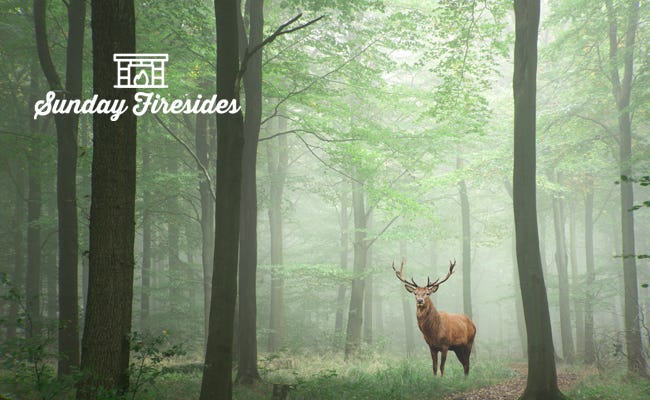
In the heat of the afternoon, a stag stopped at a pool in the woods to drink. Seeing his reflection in its still waters, he paused to survey himself from head to foot. He admiringly appraised the shape and size of his noble, wide-spreading antlers. Yet he looked with disapproval upon his legs, which to him seemed shamefully spindly and weak — an altogether unbefitting base to bear such a glorious crown.
At that very moment, the stag heard a hunter coming up behind him. He took off at a run, his nimble legs quickly carrying him safely away from his pursuer.
The moral of this modified spin on an old Aesop’s fable?
Despise not the thing that would save you.
We often bemoan the seeming weaknesses of our personal make-up, contrasting them unfavorably with our best, most winning qualities. What we fail to realize is that the obviously advantageous and the seemingly not come as a package deal.
Assertive/callous. Bold/rash. Tenacious/stubborn. Perceptive/oversensitive. Loyal/demanding. Patient/passive. Conscientious/worried. Carefree/forgetful.
Antlers/legs.
You don’t get one personal trait without the other; they’re two poles of the same wavelength of energy, two sides of the same coin — two parts of the same inner stag.
Your flaws are merely the flip sides of your virtues.
Thus, it’s no use celebrating your more admirable qualities and rueing the less. Each — the beautiful and ungainly alike — possesses salvific power: the things we like least about ourselves are often the very things that preserve us.

Note: This Sunday Fireside was first published on AoM. From time to time, we’ll be reposting previously published firesides to introduce new readers to gems from the SF archives.
In Meditations for Mortals, Oliver Burkeman points out something we all do: we treat our worst personality flaws like temporary glitches. We tell ourselves that once we finally "fix" our procrastination or our bad temper, our real lives can begin.
He poses a radical question. What if you just accepted that your biggest flaw is never going away? What if you're always going to be exactly like this?
First impression: yuck
But Burkeman argues it’s actually the ultimate relief. Think about the exhausting energy we spend trying to constantly overhaul our personalities. When you accept that a flaw is simply part of the package, you drop the heavy burden of endless self-improvement.
Best of all, you get to stop putting your life on hold. You don't have to wait until you're perfectly disciplined to do meaningful things. Instead of obsessing over some flawless "future you" that will never actually arrive, you start working with your real, messy reality. It isn't about giving up—it’s about giving yourself permission to finally plunge into the life you have right now.
I like this piece. I read it a few years ago and it stuck with me, but reading it again now it lands a little differently. I have been reading more Stoic philosophy lately and that probably shapes how I see it.
What stands out is the idea that what we think of as weaknesses are often tied directly to our strengths. The stag admires the antlers and despises the legs, but the legs are the thing that actually save him. That feels very true to life. Traits tend to travel in pairs. The same stubbornness that causes problems can also be the persistence that gets someone through hard things.
The Stoics talk a lot about accepting your nature and learning to use it well rather than wishing you were built differently. This essay feels like a simple version of that idea. The parts of ourselves we are most tempted to reject are often the exact things that end up carrying us when it matters.