
Trying Not to Try: The Art of Wu-Wei
How to attain a state of effortless action and give yourself an aura boost, according to ancient Chinese philosophers

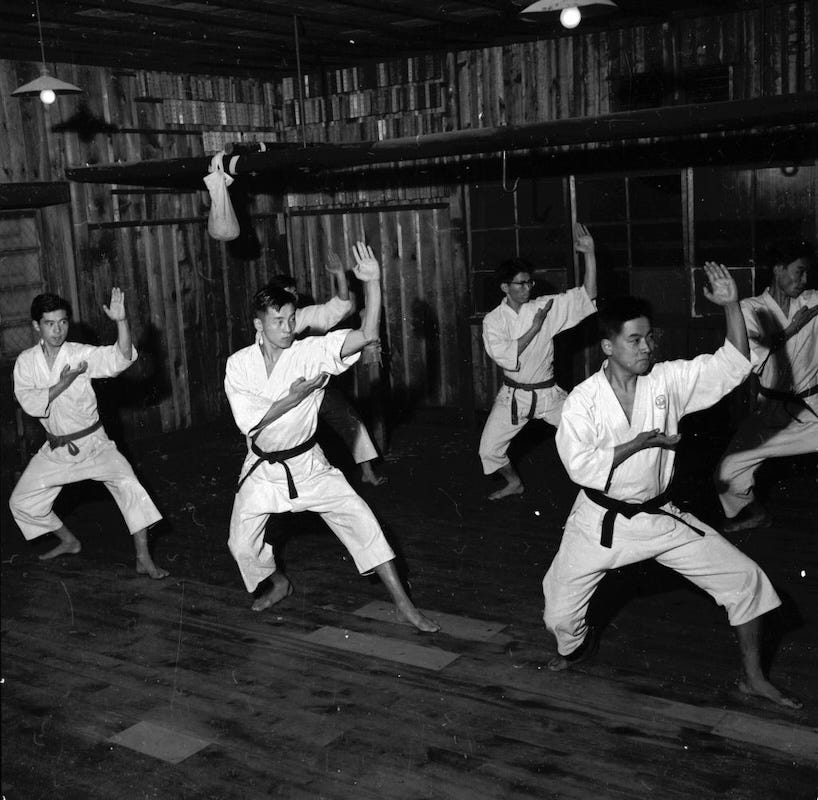
Back when I was a student at Edmond North High School in the late ‘90s, weeks before every school dance, I’d shut my bedroom door and practice dance moves in front of the mirror hanging on my closet door. I’d put on a CD burned with music that would likely be played in the cafeteria annex at school (Beastie Boys, Sir Mix-a-Lot, Will Smith, along with a smattering of Eurodance) and rehearse the same move over and over until it looked smooth as heck.
Then, at the dance, the moment would arrive. A circle would form on the dance floor, and guys would take turns jumping in the middle to strut their stuff and experience a moment of teenage suburban glory. When my turn came, I’d bust out the move I’d been drilling in my bedroom all week.
As far as anyone at that dance knew, I had come up with it on the spot. Pure improvisation. It looked effortless.
It was not effortless. I had practiced it dozens of times in front of a mirror like a doofus.
I’m a little embarrassed to admit all this. But I bring it up because it reminds me of a profound idea that I’ve thought about a lot: the ancient Chinese principle of wu-wei.
Effortless Action
Wu-wei (pronounced “ooo-way”) literally translates as “no doing” or “non-action,” but I don’t think that fully captures what ancient Chinese philosophers meant by the concept. Scholar Edward Slingerland, who wrote a whole book on the subject called Trying Not to Try, translates wu-wei as “effortless action”: the state of being active, while feeling and evincing no strain.
When you’re in wu-wei, you know what to do before your conscious mind has a chance to weigh in. The right action just flows right out of you. To people watching you do the thing, it looks completely effortless.
If wu-wei were only about personal performance, it would have a lot in common with what we now call “flow,” the state psychologist Mihaly Csikszentmihalyi made famous. You’ve probably experienced flow before. It’s that feeling when you’re in the groove while you’re doing some repetitive manual task; you know exactly what tool to grab and exactly what the next step is without thinking about it. Or maybe you’ve experienced flow while playing a sport or a video game. Everything just feels intuitive.
Wu-Wei Gives You Aura
But Chinese thinkers were after something bigger with wu-wei than flow — it’s about more than peak performance. Wu-wei can also be displayed in virtuous, moral living. When a person does the right thing at the right time without having to think about it, that’s wu-wei.
Chinese philosophers believed that a person acting with wu-wei radiates a quality called de (pronounced “duh”), which gets translated as “virtue” or “charismatic power.”
De is the glow that emanates from someone who is completely at ease and completely themselves. They instinctively know what the right thing to do is in any moment they find themselves in, and they do it and make it look easy while they’re doing it. My teenage kids would say de is “aura.”
And according to the early Chinese philosophers, de affects those around you. Folks trust the man with de. They relax around him. They want to follow him without being threatened or bribed into it. The ancient texts claim that a ruler with enough de could order an empire without issuing a single command.
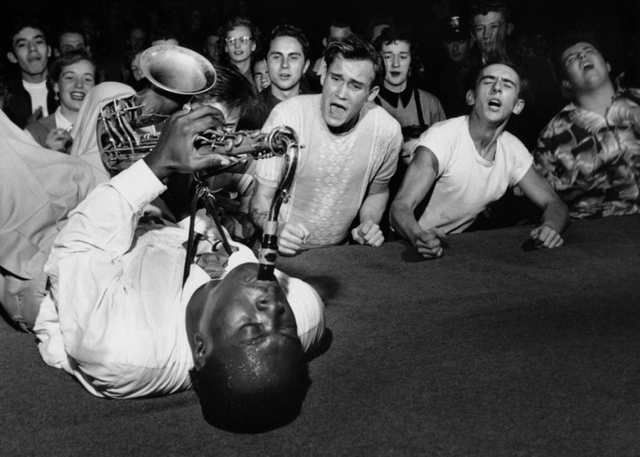
I think these guys captured something about human nature: we’re attracted to people who make the difficult look easy. Think of the jazz musician who tosses off an improvised solo on the spot. Or the speaker who gets asked a question he didn’t prepare for and delivers an answer so smooth it sounds like he rehearsed it the night before. Or the athlete who casually makes a play that looks like it should be physically impossible. Or the guy at a party who’s charming and funny without visibly straining to be charming or funny. Or the kind old lady at church who makes you feel in your bones that God loves you because she naturally radiates Christ-like love.
Warring States Chinese philosophers would argue that we’re drawn to these people because they’re expressing effortless action, or wu-wei, and thus have de.
But why do we find people who make right action look easy so dang compelling?
