
Why Aren't the Young People Dancing Anymore?
Kids aren't cutting a rug; here's why that's a real loss

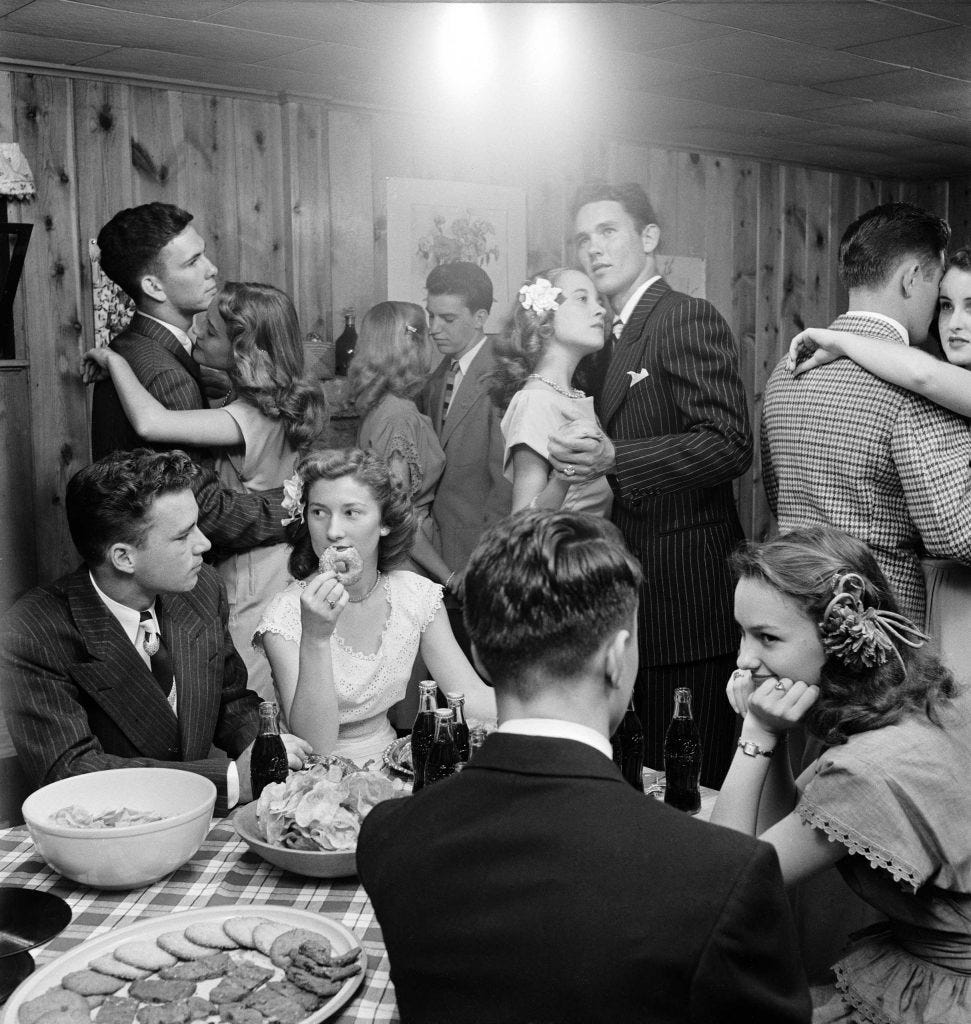
Every time my fifteen-year-old son Gus comes home from a school or church dance, I ask him the same question: “So, did you slow dance with any girls?”
His answer is typically a version of the same thing: “They didn’t play any slow songs.”
At first, I figured maybe he was just wussing out when slow songs came on and was just giving me an excuse as to why he didn’t slow dance. But he insists: no slow songs! He’d like to slow dance, but the tunes just aren’t there to do it.
So I started polling other parents I know across the country. Every single one of them reported the same thing. There are fewer dances than there used to be, and at the ones that do happen, there’s often no slow dancing.
This is crazy to me. Genuinely weird. Not “isn’t that interesting” weird, but rather bothers-me-more-than-it-probably-should weird.
Because “back in my day, by golly!” I danced. A lot. Dances were a big part of my social calendar. I was at one at least once a month.
Why did I dance a lot?
Well, in part because I’m Mormon, and Mormons are a dancing people. Ever since its founding, dancing has been part of the culture of the Church of Jesus Christ of Latter-Day Saints. When Mormon pioneers were schlepping handcarts across the plains from Illinois to the Western desert and burying their dead in shallow graves, Brigham Young made sure camps hosted regular dances because they were medicine for the soul and community glue.
When the Saints settled in Utah, some of the first buildings they erected (besides chapels) were dance halls. Today, LDS church buildings have a “cultural hall” that serves as a basketball gym and place to have potlucks, but also as a dance hall. During the 20th century, most LDS congregations hosted monthly dances for their young people. Our dancing culture is probably why many of the Dancing With the Stars pro dancers have a Mormon background. It may also explain how the whitest of white brothers, the Osmonds, could give the Jackson 5 a run for their money.
And it helps explain why I danced a lot as a teenager.
At these dances, I learned to swing dance, two-step, and do the Electric Slide and the Cotton-Eyed Joe. But I also did a lot of slow dancing. At a typical dance, I’d slow dance with maybe four or five different girls over the course of the evening — some I knew well, some I didn’t know at all. I made sure to ask the girls who weren’t getting asked to dance because that’s what my mom told me to do on my way out the door, and I love and respect my momma. I’d ask a girl, she’d say yes (usually), I’d put my hand on her waist, she’d put her hand on my shoulder, and for three minutes we’d shuffle around and make conversation, interspersed with some obligatory twirling and dipping. I had style, guys; I was smooth.
I also danced a lot outside of church.
At school, I was on the student council, which meant I helped plan dances. We’d do them every two months or so. They were casual. Nothing fancy. Just the gym, some black lights, and a local DJ. With the fast songs, we’d dance in groups and inevitably form a circle where someone would go in the middle and do some silly dance move: the lawn mower, the running man, the Roger Rabbit, or that thing where you pretend you’re holding a magic, invisible orb and waving it around (I was very proud of my magic orb abilities). Slow songs? You’d grab a partner and sway back and forth to “All for Love” by Bryan Adams. The whole thing was good old-fashioned sweaty fun, with zero pretension to it. I always felt a bit more alive and human after a dance.
There would also be impromptu dances at weekend parties with my friends. We’d go over to some kid’s house and inevitably someone would start the music, and we’d roll up the rug and start dancing with each other.
Dancing was central to the youth culture I experienced growing up, as it was for young adults for centuries. But it seems to be going away. The church in our area still does dances, but they’re not as frequent, and at some, including those at summer youth conferences (FSY, for those who are familiar), there’s no slow dancing. Same thing at a freshman dance Gus went to last week at his public high school; no slow dancing.
Dance culture seems to be on the wane, and I gotta say, it really bums me out.
