
DB Dialogues: David Coggins on the Art of Living
On taking leisure seriously, the pleasures of style, art, and fly fishing, and why the good life requires intention

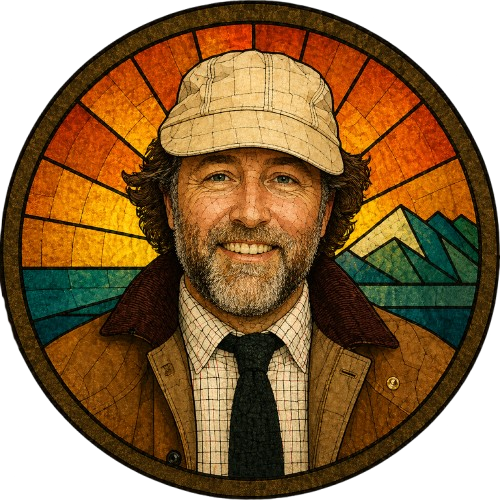
I’ve been following David Coggins’ work for years, have had him on the AoM podcast three times, and have always appreciated his approach to life.
David is a Renaissance Man. Based in NYC and a world-traveler, he’s authored numerous books on style, etiquette, and fly fishing, including Men and Style, Men and Manners, and The Optimist. He publishes regularly at his Substack, The Contender, where he writes about style, fly fishing, travel, and enjoying life’s pleasures. He also co-hosts the podcast Central Division with Michael Williams, and recently launched a print newspaper called The Print Edition.
When I look at the whole body of his work, a big theme emerges: taking your leisure seriously (but not too seriously) is essential to the good life. As I discussed in my recent article about Aristotle’s Nicomachean Ethics, Aristotle’s conception of the flourishing life requires a certain amount of external goods like money, health, and friends. It also requires enjoyment of edifying leisure. Reading good books, enjoying good art, eating good food. External goods can also include stylish clothing and hobbies like fly fishing.
In this Dying Breed Dialogue, I talk to David about his approach to leisure and how it can add to your life and connect you with others. We also get into the fun nitty-gritty of some of his passions like style, fly fishing, and collecting art.
The interview has been edited for length and clarity.
First order of business: How often do you get confused for David Goggins, the Navy SEAL motivational guru guy?
Confused with Goggins all the time. People start following me expecting workout advice — they are quickly disappointed.
When I look at the body of your writing, a big theme in it is the idea of taking leisure seriously, but not too seriously. You write about fly fishing, art, traveling, style, food, and drinks. Why do you think leisure is an important part of the good life?
I think we’re talking about the art of living. That’s sort of a grand title, but we’re also talking about time. How do we want to spend our time? One of the great balances everyone’s going to have to decide is how much of their time they wanna spend doing work, and how much of their time they wanna spend playing, so to speak, whatever that is.
I think it’s worth considering how we spend our time, especially our free time, and not give it away or spend it unreflectively. I like people who learn things, even things I don’t do. If someone knows how to sail or they make a real point to go skiing with their brothers every year — I don’t do either of those things, but I understand that, and I like that. Maybe ritual has something to do with it. You do the same thing. You go to the Masters every year if you’re lucky, or you go on a fly fishing trip. I like those things. I like that you create that weekend with your friends, maybe go to a college football game, and tailgate. I like that, and I like people who make the time to do that. That seems fairly fundamental to enjoying yourself.
Yeah, the activities you described aren’t passive. It’s not just sitting on your phone scrolling. It’s intentional.
Completely. I went to a matinee to see this French film on a Monday afternoon at two at the Film Forum, and it was full, and it was so great. Everyone wanted to see this film. You felt close to the people around you who cared about this thing that you cared about. That’s very different than kind of reflexively scrolling through your phone and very different than watching even something you like for the 50th time.
I think the phone is always gonna make us passive. I’m infinitely happy that I grew up without one for many reasons. I think it’s good to kind of go out there and go to a museum or go hiking or whatever it is and have an experience yourself. You’re the one who’s understanding it. You’re the one who’s interpreting it. You’re the one who’s living and not just swiping on a screen.
One of the things I love about your writing is that the things you write about, someone might look at from a distance and think, “That’s kind of elitist, highfalutin stuff.” You’re talking about art, French film, and style. But the way you write about it, it’s very approachable, it’s very democratic. With the way you present it to people, it’s like, “Oh wow, I could do this too. I could enjoy French movies even though I might not be the kind of guy that you typically think would enjoy French movies.” How do you do that? What’s your approach?
Thanks for the kind words. I think in one sense I was very lucky. I grew up in an artistic household. My parents cared about the arts. We went to museums, and we went to Europe. It wasn’t fancy, but it felt very natural for us. We knew my parents were involved in a theater group. We knew actors, and these things were not uncommon for us — to go to a play, even to go to see classical music performed, or to see the opera.
I think in a perfect world people would be exposed to those things. Doesn’t mean they have to like them. But they’d be exposed to them.
I think the way I write is that I try to focus on the pleasure of these things. There’s a very specific male quality that many men have. If they don’t know about something, they’re a little bit suspicious of it. Or they might say, “I definitely don’t know enough about an opera to have an opinion.” And I’m like, well, let’s try to learn about it, but first let’s experience it.
If you can go to see an opera, it can have a very powerful effect on you, whether you know anything about it or not. It’s just an emotion. Same goes with great novels. People might be surprised, but if you read War and Peace, that thing has action. It’s much more alive than you think.
I think it’s a mistake for people to say, “Well, I don’t wanna see a movie with subtitles.” You might surprise yourself. I try to bring people along to say, “Think of it like this. You like Quentin Tarantino? Tarantino was obsessed with Jean-Luc Godard. Try it out.” And I think a lot of people would surprise themselves that they actually enjoy movies with subtitles. If I can help people expose themselves to new things in a very small way, I’m happy to do that.
Yeah, and the other thing you do is you talk about opera, art, great film, but then in the same newsletter, you might talk about going to a college football game. You don’t differentiate between the two too much. You can get the same sort of satisfaction going to an OU-Texas football game as you could going to the opera.
Completely. I’ve drunk as much Miller Lite as anybody outside the state of Wisconsin, probably. I like a person who’s open to a rarefied experience, but also the ordinary. I fish a lot, and that takes me to places that can be very rarefied and other places that are totally not that way. And I think you want to connect and be open to even those less rarefied experiences because there might be something there that brings you joy.
My family has a cabin on a lake in Wisconsin, and I go there every year. It’s a huge part of my life. I’m very far away from New York when I’m there. I like to be around people who maybe don’t care about the same things that my neighbors in New York care about. I think that grounds me, or at least provides some sort of balance that I try to bring through in my writing.
Let’s talk about style. Your approach to style is great. One thing you talk about a lot is the beauty of a suit, a jacket, a bag that’s a bit battered. Whenever I look at how you look, it looks good, but it doesn’t look stuffy. What’s your overall approach to style?
I love tailored clothing — sport coats, suits. I think it’s nice when you have something, and you wear it a lot. I feel like this is another issue that maybe guys have where they only have this suit, they kind of hate it, they only wear it when they’re forced to. I would say, well, let’s get something, find something that you like, and then maybe something you actually wear a lot.
I like a tweed jacket — that’s kind of a bulletproof thing. You can wear it forever. I just wear the same jacket every day, not for a week, but most days of the week. And it’s nice to have that. The jacket kind of becomes you in a way. I like clothes that serve the person, that explain who the person is.
I think when something is worn in, it shows a commitment to that thing. When you see someone with an old, really fancy leather bag, but he’s had it for so long, it’s kind of a little bit worn in or something, even patched or taped — I love that stuff. It could be a pair of cowboy boots, too. When you can tell that someone loves something, that’s pretty good.
You mentioned finding something that’s you, that you wear all the time. This goes to an idea we talked about on the AoM podcast— the personal uniform. Tell us about that.
